
 LinkedIn
 WeChat
Why ocean decarbonisation matter
Global trade relies heavily on ocean shipping, making it one of the most important levers for reducing logistics GHG emissions.
Increasing regulatory pressure, customer expectations and the industry’s commitment to net-zero are accelerating demand for more efficient and lower-emission ocean transport solutions. These dynamics are reflected in Maersk’s focus on improving network and vessel efficiency while scaling the adoption of lower-GHG-emission fuels* and dual-fuel vessels, supported by ongoing investments in fleet renewal and operational optimisation to reduce GHG emissions across ocean operations.
Our ambition
We will take leadership in decarbonising global supply chains.
Highlights in 2025


Maersk signed an initial framework fuel supply agreement with Avenir Marine Limited to deliver liquified biomethane (bio-LNG), a lower-GHG-emission fuel, with first volumes expected in 2027.

Priorities and actions
Energy shifts
Maersk follows a diversified, fuel-agnostic portfolio strategy to ensure we can cut emissions now and over the mid-term as multiple pathways to net-zero emissions mature and, in the case fossil fuels start to wind down. Based on our pathway analysis of viable future lower-GHG-emission fuels for ocean shipping, we are currently prioritising the exploration of four alternative fuel types:

Biodiesels

Bio and e-methanol

Biomethane
Our requirements for current and possible future lower-GHG-emission fuels for ocean shipping are outlined in three policies:
Maersk green fuel requirements
Maersk biofuel sustainability requirements
Maersk methanol sustainability requirements
*Criteria for lower-GHG-emission fuels: 1) All lower-GHG-emission fuels must be certified by a third party to ensure credibility and have a proof of sustainability. 2) We look at lifecycle GHG savings; all fuels must meet the minimum reductions of the EU Renewable Energy Directive which is 65% for biofuels and 70% for e-fuels compared to referenced fossil fuel.
Efficiency measures
Maersk has focused strongly on improving efficiency across its Ocean business as part of its decarbonisation efforts. The redesign of its ocean network through the Gemini Cooperation reduces port calls and enables more stable sailing speeds, lowering fuel consumption. The company is also leveraging digital tools and optimisation of voyage planning to improve operational efficiency across routes. In parallel, Maersk is enhancing asset efficiency through fleet renewal and retrofit programmes, including fuel-saving upgrades on both owned and time-chartered vessels and the introduction of dual-fuel ships. Together, these network and asset measures have contributed to improved energy efficiency and reduced emissions intensity across ocean operations.
Featured highlights and case stories
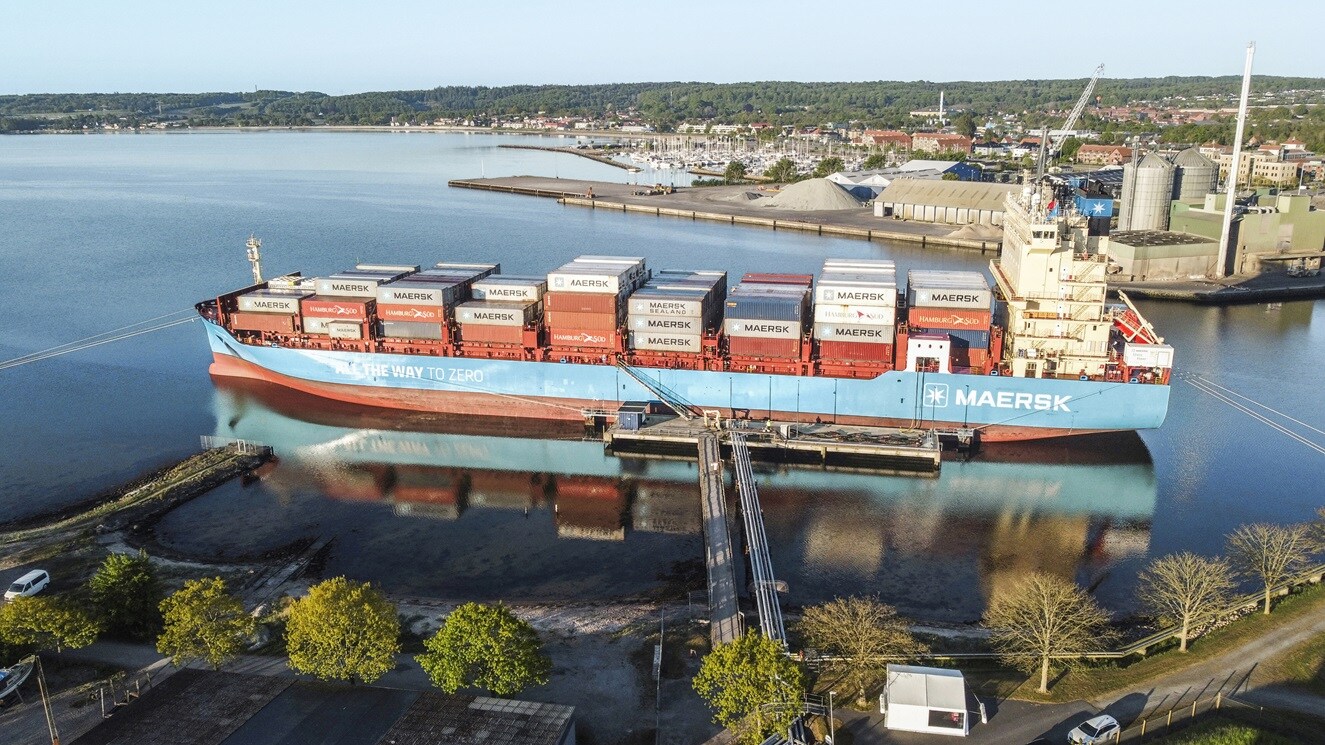
The world’s first e-methanol bunkering
In 2025, Laura Mærsk—Maersk’s first dual-fuel methanol vessel—received the first e-methanol from the newly inaugurated Kassø facility in Aabenraa, Denmark. Developed by European Energy in collaboration with Mitsui & Co., the Kassø facility is the first of its kind globally to produce e-methanol at commercial scale.
Kassø operates entirely on renewable energy sources and has an annual production capacity of 42,000 tonnes of e-methanol using biogenic CO₂ from biogas and waste incineration combined with renewable electricity.
All the way to zero
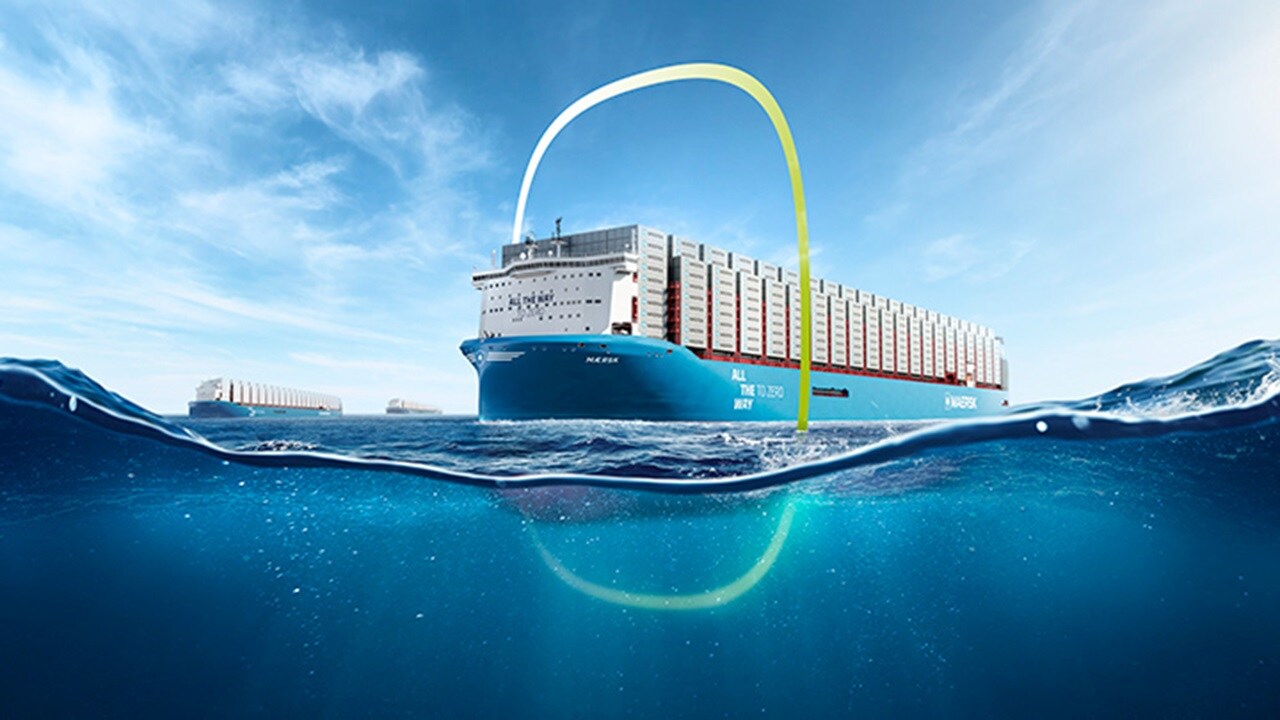
Follow the history of Maersk’s actions to reach our net zero ambitions by 2040, from the early steps to today’s efforts. Look back at the introduction of the first dual-fuel capable vessel and engine, and explore the importance of supportive, industry level regulations and collaboration between many stakeholders to close the price gap between traditional fossil fuels and low emission alternatives.
Maersk ECO Delivery: accelerate your net zero commitments
We are working closely with a broad range of customers to expand our lower-GHG-emission offerings. Maersk ECO Delivery substitutes fossil fuels with lower-GHG-emission fuels and harnesses our new technologies and vessels to provide an easier option for customers seeking to ship their cargo more sustainably.
Maersk Emissions Studio
Whether you are looking for improved visibility over ocean freight greenhouse gas emissions data, or enhanced emissions reporting and optimisation across your logistics set up, the Maersk Emissions Studio is a single point solution for keeping your emissions targets in sight.

Annual Report 2025
Learn more about sustainability at Maersk


了解更多有关马士基的信息。

人才招聘

在领英上关注我们
