 LinkedIn
 WeChat

The Growing Complexity of Customs Compliance
For companies importing into the United States today, compliance has become a moving target.
Tariff regimes shift with little notice. Court rulings challenge or overturn trade measures, leaving sourcing strategies in limbo. New enforcement priorities—from forced labor regulations to multi-agency oversight—add layers of complexity to already fragmented processes. At the same time, businesses are under pressure to calculate landed costs with precision, even as duties, exclusions, and trade policies continue to evolve.
The U.S. Customs and Border Protection is prioritizing unliquidated entries in the first phase of the refund process following a February Supreme Court decision invalidating IEEPA tariffs, providing refunds 60-90 days after request submissions—a clear indicator of how volatile and reactive the current environment has become for importers[¹].
The result? Customs teams are spending more time reacting than planning—navigating disconnected systems, chasing incomplete data, and managing risk after shipments are already in motion.
The Need for a New Approach
Traditional customs brokerage tools were not built for this level of volatility. They rely on manual inputs, static databases, and siloed workflows—leaving critical insights buried across systems and teams.
What’s needed now is not incremental improvement, but a fundamentally different way of working: one that brings together data, intelligence, and decision-making in real time.
Maersk’s AI-Powered Approach to Customs and Trade Management
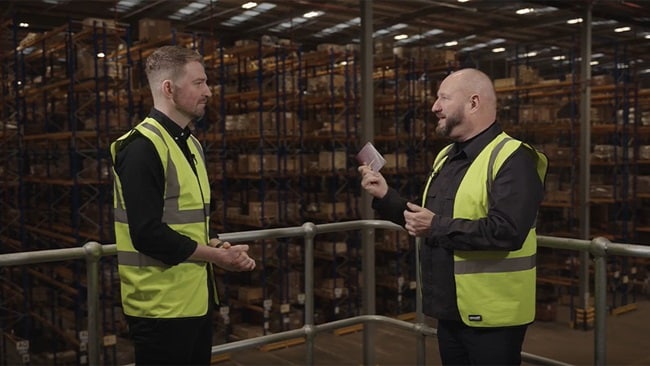
At a recent customer forum hosted in collaboration with MIT’s Center for Transportation & Logistics—“Supply Chain of the Future: Methods, Models and What’s Next in the Age of AI”—Maersk demonstrated a new approach to customs and trade management designed for today’s increasingly complex global trade environment.
The solution brings together intelligent trade decisioning and operational performance insights to help companies move beyond fragmented customs processes and reactive compliance to a cohesive, proactive trade strategy. By connecting upstream product and trade intelligence with downstream visibility into customs activity and outcomes, teams gain a clearer, more complete view of their trade environment—before, during, and after goods move.
At the front end, customs and trade teams can work more intuitively with product data, regulations, and scenarios—asking questions in natural language and evaluating implications early, rather than reacting once shipments are already in motion. Downstream, operational and analytics capabilities sit on top of transactional customs data, helping teams understand where delays, exams, and duty exposure occur—and how performance varies by port, agency, and trade lane.
Together, these capabilities help organizations plan more confidently, respond faster to regulatory change, and continuously improve customs performance at scale.
The platform combines multiple advanced capabilities, including Maersk’s vast expertise consulting on customs management, into a single, integrated experience:
- It delivers advanced analytics and forecasting capabilities that allow users to calculate the impact of sourcing decisions and dynamically engineer their products to achieve an optimal duty rate.
- It lets users upload documents, paste product links, or take a photo of an item to automatically extract attributes and generate classifications—powered by AI trained on customs‑specific data, delivering results with confidence scores and traceable sources such as binding rulings and regulatory guidance.
- It continuously monitors regulatory changes, surfacing relevant updates—from tariff changes to enforcement actions—before they impact shipments.
- It integrates requirements across dozens of government agencies, helping teams navigate compliance holistically rather than in silos.
- It embeds forced‑labor and supply‑chain risk intelligence directly into workflows, helping companies proactively manage compliance exposure.
Early users are already seeing measurable impact in the form of reduced hours needed for data analysis alone. Others highlighted improved visibility, faster decision-making, and the ability to address compliance risks before they escalate.
From Reactive to Proactive Compliance
The real value of AI in customs management lies in shifting from reactive problem-solving to proactive decision-making.
- Instead of discovering issues at the port, teams can identify risks upstream.
- Instead of manually piecing together data, they can access a unified, intelligent view.
- Instead of guessing the impact of regulatory change, they can model it in real time.
In an environment defined by uncertainty, that shift is not just advantageous—it’s essential.
Experience It for Yourself
Maersk’s AI-powered customs solution is already generating strong interest following its debut at the MIT forum—and we’re just getting started.
If you’re looking to reduce complexity, improve compliance accuracy, and unlock new efficiencies in your customs operations, the best way to understand the impact is to see it in action.
[¹] U.S. Customs and Border Protection, “International Emergency Economic Powers Act (IEEPA) Duty Refunds,” and Webinar: IEEPA Duty Refunds and CAPE, April 2026.Schedule a Demo with Our AI-Powered Trade and Tariff Studio
Book a demo with our team today and discover how AI can transform your approach to customs management.
Thank you for booking a demo with us!
You will need to confirm your email address after the form has been submitted to ensure your request is routed to the Maersk team.
Once your email is confirmed, our experts will review your request and get in touch with you shortly.
很抱歉,发送您的联系请求时出现问题。
请查看表单字段,确保所有已正确填写所有必填信息。如果问题仍然存在,请联系我们的支持团队以获得进一步的帮助。
Schedule a Demo with Our AI-Powered Trade and Tariff Studio
Book a demo with our team today and discover how AI can transform your approach to customs management.