
 LinkedIn
 WeChat
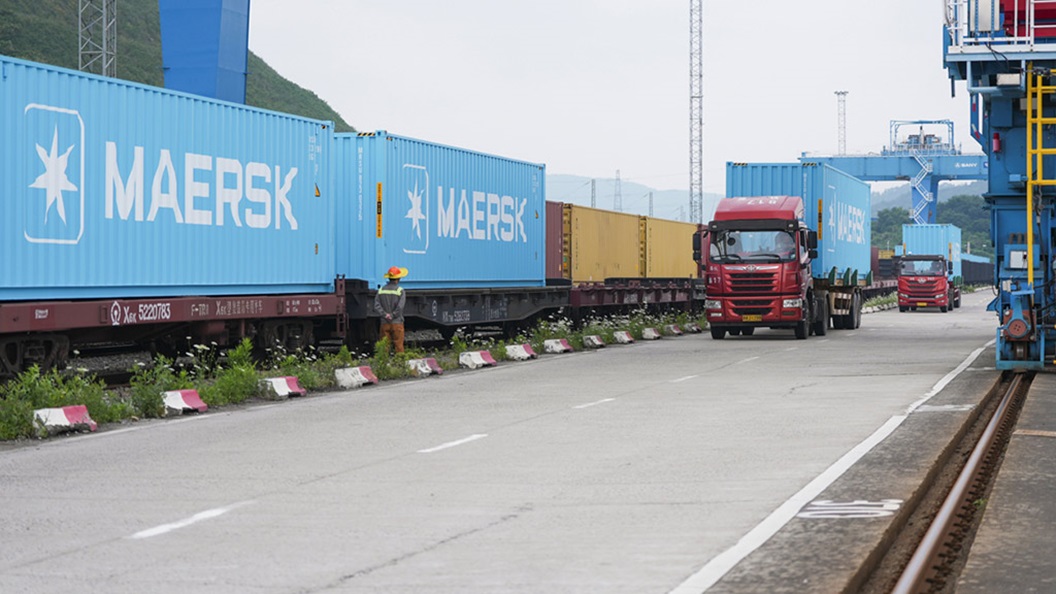
What is driving the shift from port diversification to inland network strategy?
The most significant shift in U.S. supply chain strategy in 2026 is the move from port-level diversification to inland network resilience. Between 2020 and 2024, shippers responded to congestion by spreading volume across more gateway ports—moving away from overreliance on Southern California toward Savannah, Houston, Vancouver, and Prince Rupert. That first phase is largely complete. The second phase is about what happens after the port.
During the COVID-era disruptions, shippers learned that reaching a port means little if containers can't move inland efficiently. Chassis shortages, rail car constraints, and warehouse backlogs turned port arrivals into costly bottlenecks. Today, leading shippers are redesigning their inland networks not as afterthoughts, but as deliberate competitive advantages.
"The first wave of supply chain diversification was about the ports. The next wave is about everything that happens after them," says Erin Brenner, who oversees carrier haulage, drayage, storage, and multimodal inland solutions for Maersk across the United States.
Which U.S. inland freight hubs are gaining strategic importance in 2026?
Memphis, Dallas-Fort Worth, Kansas City, and Chicago remain the primary inland freight hubs in the United States. What has changed is the breadth of shippers using them strategically. Small and mid-sized beneficial cargo owners (BCOs)—not just large-volume importers—are now positioning inventory at these inland points as a core logistics strategy, not a backup plan.
Several second-tier markets are also gaining traction:
- Phoenix, Arizona — Naturally connects Southern California, Houston, and North Texas; offers both rail and truck optionality.
- Cleveland and the Ohio Valley — Showing increased rail volume as shippers seek alternatives to Chicago-area congestion.
- Nashville, Tennessee — Emerging as a connector between Southeast ports and Midwest distribution.
These secondary hubs aren't replacing primary nodes. They're adding important infrastructure and connective tissue to the national freight network, creating redundancy that makes supply chains more resilient to localized disruptions.
Why are shippers moving inventory closer to the end customer?
The core driver is tightening delivery windows. End customers—retailers, manufacturers, and distributors—are imposing stricter supplier delivery guidelines. Meeting those requirements means having healthy inventory staged at inland points close to the final destination, not sitting at a port waiting for a rail car.
This represents a structural change in how inventory is positioned across the U.S. freight network. Just-in-time expectations are intensifying even as supply chain volatility remains elevated, forcing shippers to balance speed, cost, and resilience simultaneously.
What is multimodal optionality and why does it matter for freight shippers?
Multimodal optionality is the ability to switch between transportation modes—rail, transload, full truckload, team truck, and depot storage—at inland points based on real-time conditions. In 2026, it has become the single most important capability separating resilient supply chains from vulnerable ones.
Disruptions are no longer cyclical or isolated. Tariff shifts, labor actions, weather events, and equipment imbalances now overlap—sometimes simultaneously. The shippers who navigate this environment most effectively aren't necessarily the ones with the lowest freight rates. They're the ones with the most levers to pull when conditions change.
A real-world example
In Chicago, depot capacity in the market is running near full because customers need a place to hold loaded containers until their end customer is ready to receive them—without racking up demurrage charges. Our Maersk Depot in Elwood has availability and is a good option for full storage and potential rail overflow when volumes and dwell increase, or as a pre-pull option. When a rail shipment arrives on a Friday and the railroad offers two free days, customers face demurrage charges by Monday morning. Pre-pull solutions—moving containers off rail and into depot staging before charges begin—can eliminate that cost pressure entirely.
How does freight visibility reduce costs on the inland leg?
Freight visibility on the inland leg remains one of the largest unsolved pain points in U.S. logistics. Rail transit visibility, in particular, is still largely a black box for many shippers. Knowing a container is "in transit" is insufficient. Shippers need predictive ETAs and proactive exception management—the ability to know when cargo will arrive and receive early alerts when something will cause a delay. "I drive the same route to the office every day, and I still use a GPS navigation app," says Brenner. "Not because I don't know the way, but because it gives me a predictive ETA and reroutes me when something goes wrong. Shippers need the same thing for their cargo." A modern control tower should not just monitor shipments. It should preempt disruptions and execute reroutes—ideally with contingency plans already in place so the switch happens seamlessly and without additional cost to the customer.
What inland freight capacity constraints should shippers prepare for in 2026?
Several converging factors could tighten U.S. inland freight capacity through the second half of 2026:
| Factor | Current Status (Mid-2026) |
|---|---|
|
Factor
Rail dwell times
|
Current Status (Mid-2026)
Increased 15–20% since March 2026; Class I railroads opening auxiliary yards to manage flow
|
|
Factor
Chassis availability
|
Current Status (Mid-2026)
Tight in key inland markets, especially Chicago and Dallas-Fort Worth
|
|
Factor
CDL regulations
|
Current Status (Mid-2026)
Evolving non-domiciled commercial driver's license rules creating uncertainty for carrier capacity
|
|
Factor
Empty container evacuation
|
Current Status (Mid-2026)
Pace of repositioning empties back to Asia affecting equipment availability at inland depots
|
Shippers who build optionality into their inland networks now—diversifying modes, staging inventory at strategic points, and investing in end-to-end visibility—will be better positioned to absorb peak season volatility and regulatory shifts.
Be ready for supply chain resilience to go all the way! Discover more with Maersk Logistics Insights, and learn more about inland transportation with Maersk.
Frequently Asked Questions
About the author
Erin Brenner leads First Mile and Depot Operations for Maersk in the United States, overseeing product development, pricing, business development, and operations across carrier haulage, drayage, storage, and multimodal inland solutions. She brings more than 20 years of experience in logistics and supply chain operations.


