LinkedIn
 WeChat
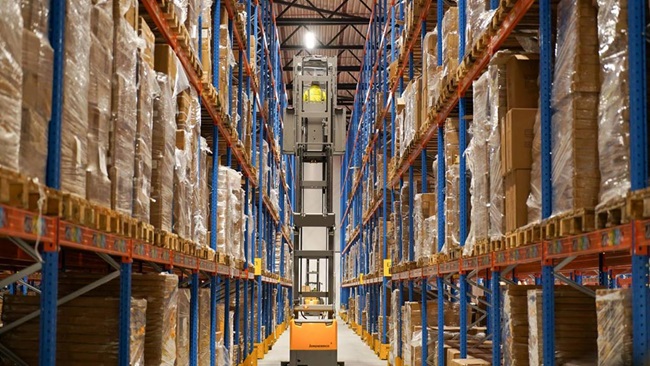
Building on the logistics predictions for last year, looking ahead to 2026, the warehousing sector is becoming increasingly dynamic, with players coming and leaving, and uncertainty driving major changes across the industry.
Top trends shaping warehousing in 2026
- Continued disruption: The geopolitical unrest that characterised 2025 will carry into the new year, fuelling the rising need for logistics resilience. Projections remain uncertain, as trade continues to be affected by tariffs, geopolitical conflicts and further disruptions. As the likelihood of extreme and unpredictable weather increases additional stress will be placed on global logistics systems. “Because of this continued uncertainty, businesses are concerned about how these geopolitical changes might affect their supplier base and supply chains, including their warehousing footprint” says Jay Lengel, Global Head of Solution Engineering, Maersk Contract Logistics.
- Automation: Just as predicted for 2025, automation remains a key focus for 2026, forming part of a long-term trend expected to expand over the next five years. According to Mordor Intelligence, “the warehouse robotics market will reach a value of $21.08 billion by 2030, growing at a strong 17.7% compound annual growth rate (CAGR)”. Merged with artificial intelligence (AI), automation will shape how warehouses are organised, stocked, operated and maintained. To keep pace, consolidation will continue, balanced along with ongoing cost pressures and the need for flexibility. Most importantly, as Forbes has highlighted in recent years, automation does not necessarily mean full robotisation but rather smarter processes: “The reality is that while automation is a critical support component for optimizing warehousing operations, true intelligence goes far beyond robotics—it’s about creating warehousing and supply chain resilience.”
- AI powered solutions: In 2026, artificial intelligence (AI) will be a leading trend revolutionising warehousing, shifting from a competitive advantage to an operational necessity. AI-driven automation will optimise inventory management, picking systems, and real-time demand forecasting, enabling warehouses to achieve greater accuracy, speed, and cost efficiency. Autonomous mobile robots and AI-powered software will work together to streamline inbound and outbound operations, reduce error rates, and improve throughput. As labour shortages and rising costs persist, AI adoption will help warehouses remain agile and resilient, with predictive analytics and adaptive learning driving continuous improvement. Companies that delay AI integration risk falling behind in both service and efficiency.
- Cyber security: With warehouses becoming increasingly digital, cyber threats are more sophisticated and frequent. In 2026, attackers use AI to automate attacks and exploit vulnerabilities faster than ever. The IBM “Cost of Data Breach Report 2025” found that retail businesses faced an average loss of $3.54 million per breach, with risks heightened by weak access controls and the rise of unsanctioned AI tools. To address these challenges, warehouses must implement layered security—combining strong identity management, real-time monitoring, and regular risk assessments. AI-driven threat detection, employee awareness, and robust vendor oversight are now essential. Building true cyber resilience means not just deploying advanced technology but also fostering a culture of vigilance and rapid response.
- Visibility: Visibility is now a cornerstone of effective warehousing, with 2026 seeing a shift towards real-time, data-driven transparency across inventory and supply chains. Modern warehouse management systems leverage IoT, AI, and cloud platforms to provide end-to-end visibility, enabling rapid responses to disruptions and smarter inventory decisions. Internally, organisations are integrating unified data streams to transform raw information into actionable insights, reducing manual tracking and supporting proactive decision-making. Externally, industry leaders emphasise that while real-time visibility is essential, the real advantage lies in how quickly and intelligently companies act on this data. Enhanced visibility empowers warehouses to maintain agile inventories, minimise delays, and meet evolving customer expectations, ensuring readiness for any market shift.
The future of warehousing
In summary, businesses and logistic professionals should brace themselves for yet another year of uncertainty and rapid change, making adaptability and strategic foresight essential for navigating evolving market conditions and seizing new opportunities. “As uncertainty persists, organisations are prioritising resilience. By collaborating with the right integrated logistics partner, companies gain the network reach, insights, and tools needed to adapt quickly and maintain continuity in a volatile environment.” affirms Kevin Bennett, Vice President, Global Business Development, Maersk Contract Logistics. Collaboration and knowledge can truly be the key to prepare for 2026, and weather the storm while still gaining space to grow.

Disclaimer: The content in this article is to speak to trends and insights Maersk sees in the industry and not necessarily representing our position or strategy around automation and AI in the warehousing space across any particular region of the world.
Be ready for warehousing to go all the way! Explore warehousing opportunity at Maersk or explore more trends like these at Maersk Logistics Insights.