 LinkedIn
 WeChat

Most logistics providers focus on the shipment. But the customer only sees the delivery.
In Specialized LTL and Heavy-Bulky Delivery Services, that final delivery moment isn’t just a handoff, it’s a brand handshake. The stakes are high. And speed isn’t the defining factor. Execution is. Because the customer doesn’t care about your network, your scan events, or your service-level agreement (SLA) reports.
They care about how you showed up. And showing up doesn’t mean just delivering on time. It means delivering prepared, respectful, informed, and invisible.
But what defines a great customer experience in freight deliveries? Not one moment, but a system of moments. Five invisible layers, stitched together seamlessly to create what the customer remembers — or what they report. Let’s unpack them.
Layer 1 : Expectation setting
The delivery process begins long before the truck even moves.
Consumer expectations begin forming the moment a date is promised, a window is sent, or a shipment is confirmed. And when these expectations are even slightly misaligned, a fully on-time, damage-free delivery can still feel like a failure. A curbside drop instead of install, a missed call before arrival, a window that quietly shifts without warning… and that expected experience breaks before the delivery even happens.
That’s because the experience didn’t break at the doorstep. It broke at the point of promise.
Customers don’t get frustrated because a truck was late or they had to reschedule. They get frustrated when they were told it will be early. Or worse, no one told them anything at all. They want the right kind of delivery, at the right time, exactly as they were promised. That sounds basic. But in Specialized LTL and Heavy-Bulky Delivery Services, it’s anything but.
Setting expectations is often seen as a pre-delivery admin step. But in specialized ground freight delivery, it’s operational. It determines whether a customer will be present for a delivery, whether they’ve cleared space for installation, or whether they’re expecting a white glove experience or simply a drop-off at the garage.
Expectation setting is the first operational moment in customer experience, and one of the most overlooked. Because it is not just about delivery windows and time slots. It’s the preparation on both sides of the handoff and aligning to give a drama-free delivery experience. And if you don’t own that moment, the customer will — with (misaligned) assumptions. When that happens, no KPI, or even a 98% on-time rate, will protect the experience and the brand.
We proactively call the customers when a delay is expected based on route progress, using algorithms to adjust windows and communicate new ETAs. This simple communication goes a long way in setting expectations and alignment about the delivery.
Because at the end of the day… It’s not a scan event or a supply chain milestone you’re aligning with. It’s a person planning their day around your promise.
Layer 2 : Communication rhythm
The customer doesn’t need constant updates. They need the right ones at the right time.
In the days and hours leading up to final delivery, timing isn’t the only thing that matters. Trust builds (or breaks) in the rhythm of communication. When updates are late, inconsistent, or vague, customers start to fill in the blanks themselves. And what they imagine is almost always worse than what’s actually happening.
A two-hour window that comes and goes without a text. A missed call with no voicemail. A routing delay that’s never mentioned until it’s too late. What is often seen as “basic communication” in the delivery process is actually one of the most emotional and crucial moments in the customer's experience journey.
If there’s silence, the customer assumes we’ve forgotten about them. Or that something’s gone wrong. It creates anxiety. Even if we’re still on track.
We have a full triage team handling inbound and outbound calls, keeping customers informed and our drivers supported. That rhythm matters. Even something as small as a one-line update can change the tone of the experience.
This isn’t about bombarding the customer with updates. It’s about designing the right cadence of care — timely, proactive, and relevant. So, the silence doesn’t invite speculations, and confusion doesn’t turn into a complaint. These touchpoints include:
- Pre-shipment alert, to confirm windows and special instructions
- Route milestone check, to proactively update if the plan shifts
- Pre-arrival call or text, to set the final expectation, 30 minutes out
- Real-time exceptions, for blocked driveway, wrong address, install issues, etc.
Because at the end of the day… Customer experience isn’t just what happened, it’s what they felt was happening. And what they felt was shaped by how well you kept them in the loop.
Layer 3 : Shared visibility
Delivery isn’t just what you see on your dashboard. It’s what the customer sees, too.
Visibility in supply chains has become one of the most overused, and misunderstood, terms. Internally, it often refers to scan events, timestamps, route progress, and driver status. But to the customer? It’s none of that. To them, visibility means:
- Do I know what’s happening right now?
- Do I understand what to expect next?
- Can I get a clear answer if I call?
That’s not software. That’s shared understanding.
Even if it’s in the system, if the customer doesn’t see it or understand it, we didn’t do our job well. We train our CX teams not just on process, but on product awareness: what’s being delivered, where it’s coming from, what experience was sold, what expectations were set.
This is especially critical in Specialized LTL and Heavy-Bulky Delivery, where the expectations are higher. Is the customer expecting assembly? Do they know it’s a two-person lift? Do they realize there’s an install involved? Every single thing matters in shaping the experience.
Visibility, then, isn’t just about where the truck is. It’s about what’s inside, what was promised, and who knows what across all touchpoints. Shared visibility means shared context. And that can’t be patched with a dashboard. It takes process, training, and alignment across teams that represent the brand - even if they’re not wearing the logo.
Because at the end of the day… No visibility means no trust. And when that happens, customers don’t just lose confidence in the delivery, they lose confidence in the brand behind it.
Layer 4 : Empathy in execution
This isn’t a delivery. It’s an interaction. And that interaction is the experience.
In ground freight, execution is usually measured by milestones — arrived, delivered, signed. But for the customer, that’s not what defines the experience. What defines it is how it felt. Whether they were seen. Whether they were rushed. Whether anyone cared enough to wipe their shoes, read the delivery notes, knock before entering, or simply smile while greeting them.
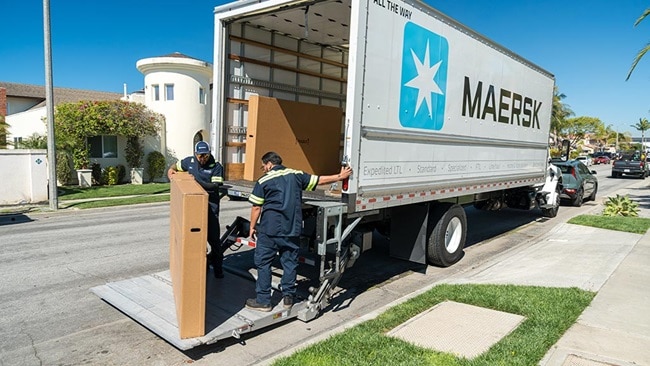
You’re stepping into somebody’s home… you’ve got to treat it with respect. It starts with care. From how the crew walks into the home, how they talk to the customer, how they leave the space. Clean, respectful, on point. That’s what people remember.
Empathy in execution doesn’t mean over-extending. It means recognizing that the customer is receiving a service, not just a shipment. Sometimes it’s their first couch. Or a refrigerator delivered on the only day they’re off work. Or a medical bed for their mother-in-law.
That’s why execution isn’t just about lifting, placing, or installing. It’s about understanding the situation—and showing that you genuinely care. That could mean:
- Respecting the home you’re entering
- Quietly navigating around a sleeping baby
- Slowing down when a customer is elderly or anxious
- Handling a brand-new TV like it’s their investment, not just the next job
It’s the nuance that no tracking system can capture — but every customer remembers.
Empathy isn’t fluff. It’s operational excellence, expressed emotionally. It’s precision. It’s anticipating needs, preparing for emotional context, and delivering with respect. Because even the smoothest operation can feel abrasive if it lacks care in the moment that matters most. And that’s what most CX strategies miss. They focus on the customer up to the door, not at the door.
Because at the end of the day… You’re not just delivering a product. You’re delivering an experience into somebody’s home. And that is what’s remembered — how it felt.
Layer 5 : Ownership at the edge
What defines a solid customer experience? When someone steps up, even if it wasn’t their job.
In freight delivery, problems don’t wait to be routed. They show up at the moment. A missing part, a dented product, a blocked driveway, a confused customer, an installer running late. And by the time a support ticket is created or an issue is “escalated”, the experience is already being defined.
Things will go wrong. That’s just logistics. But what matters is how it’s handled. That’s what changes the experience. If a call comes in, and we can fix it on the spot, we do it. Whether it’s rescheduling, confirming something with dispatch, or clearing up some confusion, our team is trained to handle it directly.
Ownership at the edge means empowering the person in the moment to act — whether that’s the final-mile driver, the dispatcher, or the customer service rep. It’s not about skipping the process or handing out blank checks. But to own the situation and fix what you can, when it is possible. Because to the customer, that becomes the brand. This looks like:
- A CX rep adjusting a delivery time on the fly to avoid a conflict
- An installer pausing to explain an operational detail, instead of saying “Call the brand.”
- A team member taking the heat (even when it wasn’t “their fault”) because the customer was in a bad mood and needed some help or had some extra questions.
In Specialized LTL and Heavy-Bulky Delivery Services, this kind of ownership is even more critical. Because the deliveries are complex. There’s more room for confusion. The more specialized the service, the more personal the moment. And when no one steps in, the impact hits harder.
Ownership, thus, is what turns a tough delivery into a drama-free delivery and a moment of brand trust. It’s the invisible confidence that tells the customer: “We’ve got it. And we’ve got you.” — And when that’s embedded across your CX model, the difference shows. Not just in metrics, but in customer reviews, in reduced escalations, in how often customers say: “They really took care of it.”
Because at the end of the day… It’s not about who was at fault or what caused the issue. It’s about who showed up, took responsibility, and cared enough to make it right.
5 Layers of Customer Experience in Ground Freight Delivery
| Layer | What it answers |
|---|---|
|
Layer
Expectation setting
|
What it answers
Did we align with the customer before we dispatched?
|
|
Layer
Communication rhythm
|
What it answers
Did we keep them informed at the right moments?
|
|
Layer
Shared visibility
|
What it answers
Did everyone, customer and crew, know what was happening?
|
|
Layer
Empathy in Execution
|
What it answers
Did it feel like care, not just completion?
|
|
Layer
Ownership at the edge
|
What it answers
When things broke, did we fix it like it truly mattered?
|
This is the experience mile, the emotional mile
In freight, most failures aren’t operational. They’re emotional. A missed window. A cold interaction. A broken promise. Not because of the product, but because of the proximity — to people’s homes, their expectations, their lives. And in Specialized LTL and Heavy-Bulky Delivery, where the delivery is the experience, CX isn’t just a step. It’s the system. It amplifies everything else: the planning, the network, the promise. Or it exposes the cracks.
And at the end of this mile, it’s not a scan code… It’s a human. A mother trying to soothe her toddler while the dryer is being replaced. A son setting up a hospital bed for his grandma. A couple finally replacing their broken fridge. — It’s not a number. It’s a moment that matters.
It’s quiet when it works. Loud when it fails. And always remembered.
Because at the end of the day… The only metric that matters is what the customer experiences and remembers. If you want better, drama-free delivery outcomes, start by rethinking your CX inputs. At Maersk Ground Freight, customer experience isn’t an afterthought. It’s the delivery standard — owned, embedded, and designed to deliver trust at the final mile. Explore how we can help.
Interested in specialized LTL services in North America? We deliver the extra care that transforms your one-time buyers into repeat customers. Contact us to get tailored advice that best suits your business.